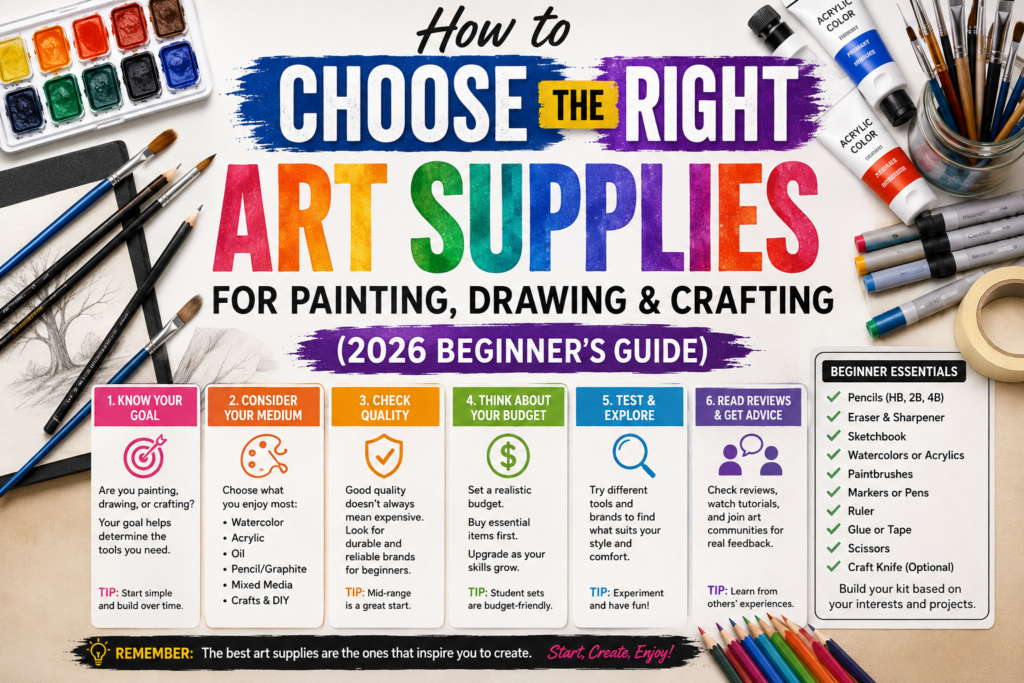

The top art supplies for painting and drawing 2026 can be confusing to choose with so many options available today. Walk into any art store and you’ll find hundreds of paints, brushes, pencils, sketchbooks, markers, and crafting tools. The good news is you don’t need everything to start creating great art. The key is choosing the right supplies based on your style, skill level, and budget.
Choosing art supplies for the first time can feel overwhelming. The good news? You don’t need everything to start creating amazing artwork. The secret is choosing the right supplies based on your interests, skill level, and budget. This beginner’s guide will help you understand which art supplies are worth buying, which ones you can skip for now, and how to build a creative toolkit that grows with your skills.
Why Choosing the Right Art Supplies Matters
Many beginners believe expensive supplies automatically create better artwork. While quality tools can improve your experience, the best supplies are the ones that match your creative goals.
Think of art supplies like kitchen tools. A professional chef doesn’t need every gadget in the store to cook a great meal. Similarly, an artist only needs the essentials that support their chosen medium.
The right supplies help you:
- Learn techniques faster
- Avoid frustration
- Improve artwork quality
- Save money
- Enjoy the creative process
Step 1: Decide What Type of Art You Want to Create
Before buying anything, ask yourself what interests you most.
Painting
If you love colorful artwork, landscapes, abstract art, or portraits, painting supplies should be your focus.
Best beginner painting supplies:
- Acrylic paints
- Canvas panels
- Synthetic paint brushes
- Paint palette
- Water container
Drawing
If you enjoy sketching people, animals, comics, or realistic illustrations, start with drawing materials.
Best beginner drawing supplies:
- Graphite pencils
- Sketchbook
- Eraser
- Sharpener
- Fine liner pens
Crafting
If you love DIY projects, scrapbooking, journaling, or handmade gifts, crafting supplies are ideal.
Best beginner crafting supplies:
- Craft scissors
- Glue
- Decorative paper
- Washi tape
- Cutting mat
Step 2: Understand Different Types of Paint
Choosing paint can be confusing because several options exist.
| Paint Type | Best For | Difficulty Level |
|---|---|---|
| Acrylic | General painting | Beginner |
| Watercolor | Soft artistic effects | Beginner-Intermediate |
| Gouache | Illustrations and design | Intermediate |
| Oil Paint | Professional artwork | Advanced |
Acrylic Paint
Acrylic paint remains the most beginner-friendly choice in 2026. It dries quickly, cleans with water, and works on many surfaces.
Watercolor
Watercolors create beautiful transparent effects and are easy to transport. They require more practice but offer unique artistic possibilities.
Oil Paint
Oil paints provide rich colors and smooth blending but require solvents and longer drying times.
For most beginners, acrylic paint is the smartest first purchase.
Step 3: Learn Which Brushes You Actually Need
Brushes come in dozens of shapes, but beginners only need a few basic types.
Round Brush
Perfect for details, outlines, and small areas.
Flat Brush
Excellent for backgrounds and broad strokes.
Filbert Brush
Combines the benefits of round and flat brushes.
Detail Brush
Ideal for fine lines and intricate work.
A small set containing these four brush types is enough for most beginners.
Step 4: Choose the Right Paper or Surface
The surface you work on is just as important as the paint or pencil you use.
For Drawing
Look for:
- Acid-free paper
- Medium-weight sketchbook pages
- Smooth texture for detailed work
For Watercolor
Choose:
- Watercolor paper
- Heavyweight sheets
- Cold-pressed texture
For Acrylic Painting
Use:
- Canvas panels
- Stretched canvas
- Acrylic paper pads
Using the wrong paper can cause warping, tearing, or poor results.
Step 5: Buy Quality Pencils
Pencils are among the most versatile art tools available.
Graphite Pencils
A beginner set should include:
- 2H
- HB
- 2B
- 4B
- 6B
These grades allow you to create both light sketches and dark shading.
Colored Pencils
Choose artist-grade colored pencils if possible. They blend better and produce more vibrant colors.
Charcoal Pencils
Great for dramatic sketches and expressive artwork.
Step 6: Select Essential Crafting Tools
Crafting often requires different tools than painting or drawing.
Must-Have Craft Supplies
| Supply | Purpose |
|---|---|
| Scissors | Cutting paper and materials |
| Craft Glue | Permanent bonding |
| Hot Glue Gun | Fast assembly |
| Cutting Mat | Protects work surfaces |
| Decorative Papers | Scrapbooking and DIY projects |
| Washi Tape | Decorating journals and cards |
These supplies can support hundreds of creative projects.
Step 7: Set a Beginner Budget
One of the biggest mistakes new artists make is spending too much money too soon.
Beginner Budget ($25–$50)
- Sketchbook
- Pencil set
- Eraser
- Acrylic paint starter set
- Basic brushes
Intermediate Budget ($50–$150)
- Better-quality paints
- Multiple sketchbooks
- Canvas panels
- Colored pencils
- Fine liners
Advanced Budget ($150+)
- Professional-grade supplies
- Specialty brushes
- Premium papers
- Mixed-media materials
Start small and upgrade gradually as your skills improve.
Common Mistakes Beginners Should Avoid
Buying Everything at Once
You don’t need a studio full of supplies on day one.
Choosing the Cheapest Materials
Extremely cheap supplies often lead to poor results and frustration.
Ignoring Paper Quality
Great pencils on poor paper still produce disappointing artwork.
Following Trends Instead of Interests
Buy supplies that support the art you enjoy making, not what is currently popular online.
Forgetting Storage Solutions
Organized supplies last longer and make creative sessions more enjoyable.
Recommended Beginner Art Supply Checklist for 2026
Painting Starter Kit
- Acrylic paint set
- Canvas panels
- Round brush
- Flat brush
- Palette
Drawing Starter Kit
- Graphite pencils
- Sketchbook
- Kneaded eraser
- Sharpener
- Fine liner pens
Crafting Starter Kit
- Scissors
- Glue
- Cutting mat
- Decorative paper
- Washi tape
This combination provides everything most beginners need without overspending.
Final Thoughts
Choosing the right art supplies in 2026 doesn’t have to be complicated. Start by identifying whether you enjoy painting, drawing, or crafting most. Focus on quality essentials instead of buying every product available. A simple collection of well-chosen tools will help you learn faster, create better projects, and enjoy the artistic journey much more.
Remember, the world’s greatest artists didn’t begin with massive collections of supplies. They started with a few trusted tools, practiced consistently, and gradually expanded their creative toolkit over time.
FAQs
1. What are the best art supplies for absolute beginners?
A sketchbook, graphite pencils, eraser, acrylic paints, and a few brushes are the best starting point.
2. Should beginners buy professional art supplies?
Not necessarily. Mid-range supplies usually provide excellent quality while remaining affordable.
3. Which paint is easiest for beginners?
Acrylic paint is generally considered the easiest because it dries quickly and cleans up with water.
4. Is a sketchbook necessary?
Yes. A sketchbook helps develop drawing skills, track progress, and experiment with ideas.
5. How much should a beginner spend on art supplies?
Most beginners can build a solid starter kit for between $25 and $75, depending on their chosen medium.

Pingback: Top 22 Must-Have Art Supplies for Painting, Drawing & Crafting 2026