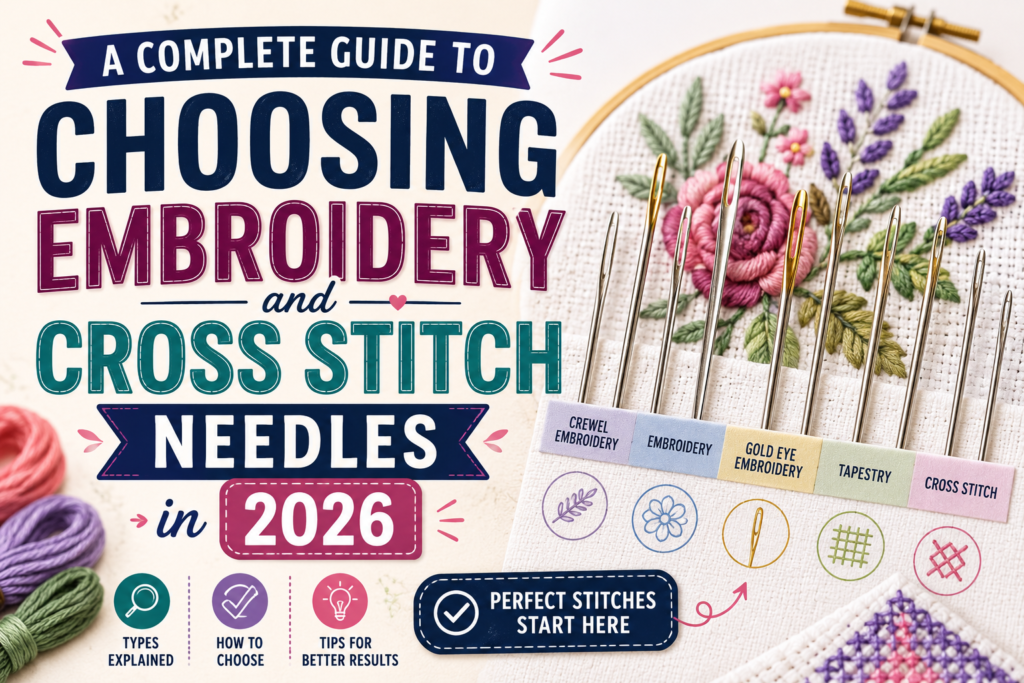

Embroidery and cross stitch projects begin with choosing the right needle, and in 2026 there are more options available than ever before. Selecting the best embroidery needle or cross stitch needle can improve stitch quality, prevent fabric damage, and make crafting more comfortable. Needle size, eye shape, and tip type all play important roles depending on the fabric, thread, and stitching technique you use. Whether you’re a beginner or an experienced crafter, understanding these differences can help you achieve cleaner and more professional results.
When shopping for embroidery and cross stitch needles, it is important to consider factors such as fabric count, thread thickness, and project complexity. Tapestry needles are commonly used for cross stitch because of their blunt tips, while sharp embroidery needles are ideal for detailed needlework and decorative stitches. By choosing the correct needle for your project, you can reduce thread breakage, improve accuracy, and enjoy a smoother stitching experience. This guide covers everything you need to know to select the best embroidery and cross stitch needles in 2026.
Why Choosing the Right Needle Matters
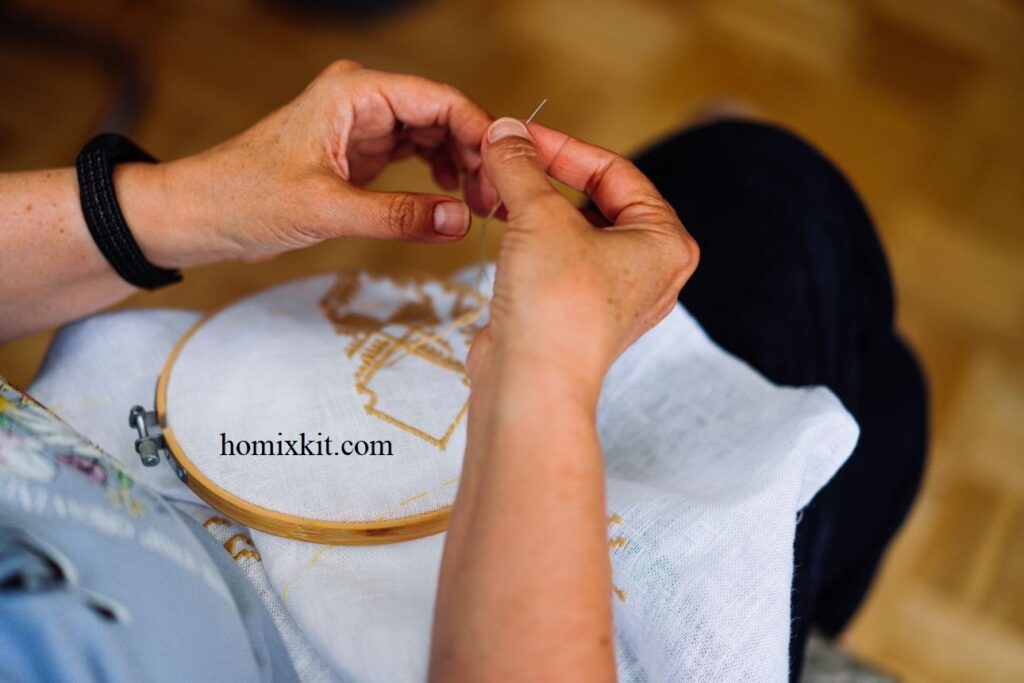
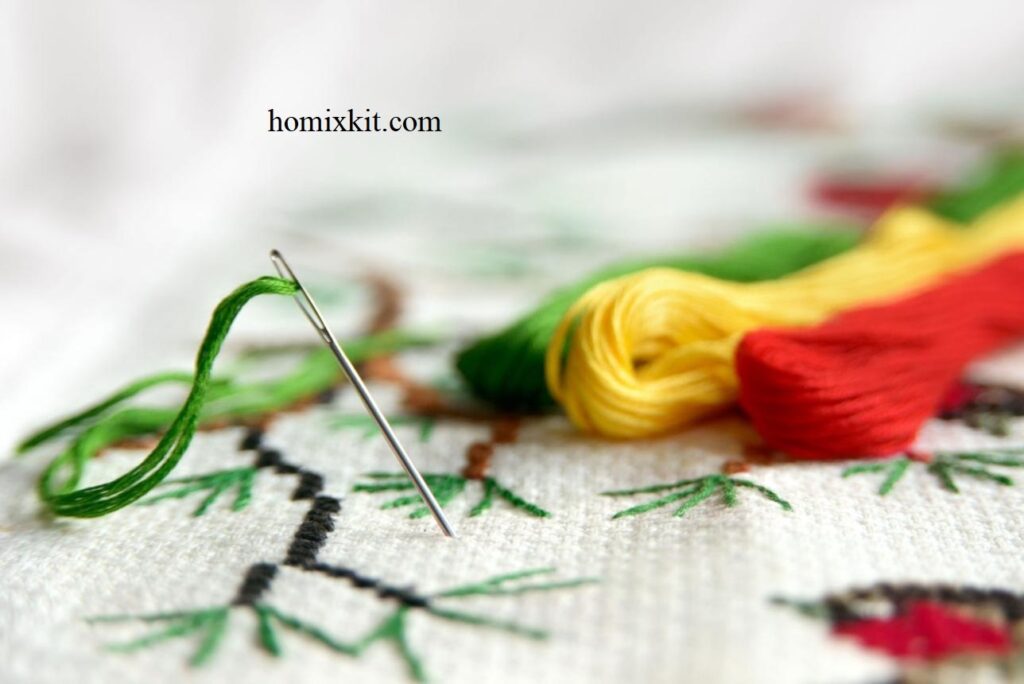
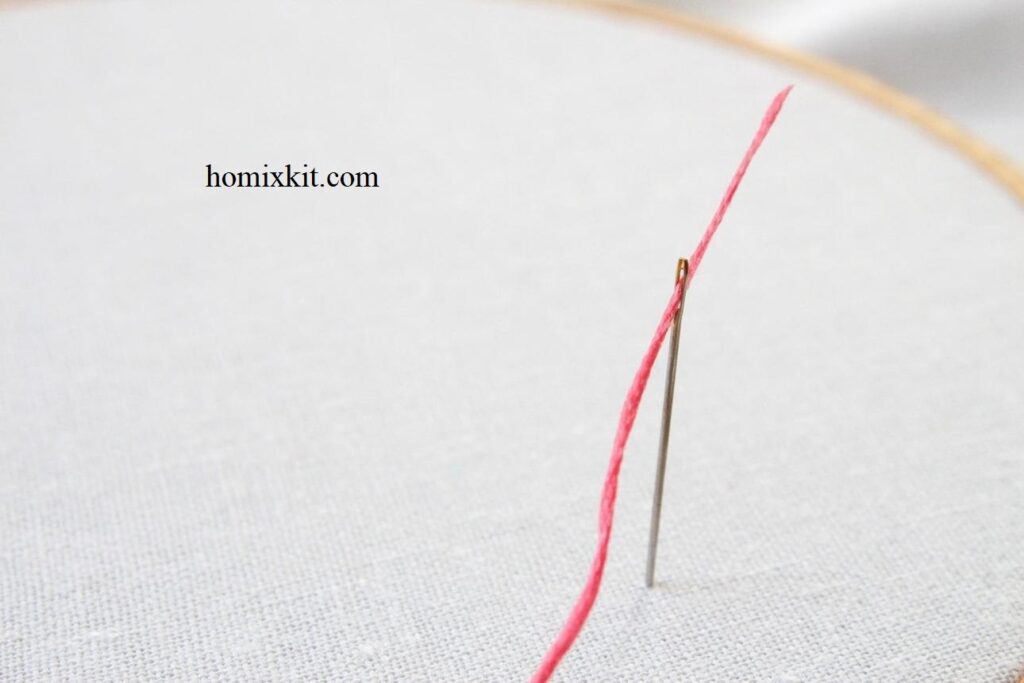
If you’ve ever struggled with fraying thread, uneven stitches, or fabric damage, there’s a good chance the needle was the culprit. Many beginners spend hours selecting beautiful embroidery floss, premium fabrics, and intricate patterns but pay very little attention to the needle itself. In reality, the needle is the bridge between your thread and fabric, making it one of the most important tools in your stitching kit.
A properly selected needle glides through fabric effortlessly, protects thread fibers, and creates clean, professional-looking stitches. Using the wrong needle can result in split threads, enlarged fabric holes, skipped stitches, and unnecessary hand fatigue. Whether you’re creating delicate floral embroidery or detailed cross-stitch masterpieces, choosing the correct needle dramatically improves both the stitching experience and the finished result.
Recent stitching guides published in 2026 emphasize that needle selection remains one of the most overlooked factors affecting embroidery quality. Many experienced stitchers report that simply switching to the correct needle size immediately improves thread tension, stitch consistency, and overall project appearance.
The Impact on Stitch Quality
The quality of your stitches depends heavily on how smoothly the needle passes through fabric. A needle that is too thick can stretch fabric holes and distort the weave. A needle that is too thin may create excessive friction, causing floss to wear out prematurely. This friction can lead to fuzzy thread, broken strands, and inconsistent stitch coverage.
Think of a needle as a vehicle traveling on a road. When the vehicle is the correct size for the road, movement is smooth and efficient. When it’s too large or too small, problems occur. The same principle applies to embroidery and cross stitch. Proper needle sizing ensures balanced tension, clean thread movement, and attractive stitch definition.
Professional embroiderers often test several needle sizes before beginning large projects. This extra effort can save countless hours of frustration later. The result is a cleaner finish that looks more polished and lasts longer.
Common Problems Caused by Wrong Needles
Many stitching problems can be traced directly to improper needle selection. Beginners frequently blame thread quality or fabric defects when the real issue lies elsewhere. Understanding these problems helps you diagnose and fix them quickly.
Common signs that you’re using the wrong needle include:
| Problem | Likely Cause |
|---|---|
| Fraying thread | Needle eye too small |
| Enlarged fabric holes | Needle too large |
| Difficulty pulling thread | Needle too small |
| Split fabric fibers | Sharp needle used incorrectly |
| Uneven stitches | Incorrect needle type |
| Hand fatigue | Needle unsuitable for project |
According to recent embroidery needle compatibility studies, most stitching frustrations result from mismatched needle and thread combinations rather than poor stitching technique.
Understanding Embroidery Needle Types
Not all needles are designed for the same purpose. Walking into a craft store can feel overwhelming because dozens of needle types are available. Understanding their differences makes shopping much easier.
The four most commonly used needles for embroidery and cross stitch are crewel needles, tapestry needles, chenille needles, and beading needles. Each serves a unique purpose and performs best under specific conditions. Using the correct type ensures better control, smoother stitching, and less thread damage.
Professional stitchers often keep multiple needle types in their toolkit and switch between them depending on the project requirements. This flexibility allows them to handle various fabrics, thread weights, and decorative techniques efficiently.
Crewel Needles
Crewel needles, often called embroidery needles, feature a sharp point and a long eye. They are ideal for traditional surface embroidery because they easily pierce tightly woven fabrics.
These needles work exceptionally well with cotton floss, silk threads, and decorative embroidery stitches. Their sharp tip allows precise placement, making them perfect for satin stitches, stem stitches, and French knots.
Tapestry Needles
Tapestry needles are the gold standard for cross stitch. Unlike crewel needles, they feature a blunt tip and a large eye. The blunt point slips between fabric threads instead of piercing them, protecting the fabric structure and reducing thread splitting.
Cross stitch experts consistently recommend tapestry needles for Aida cloth, evenweave, linen, and needlepoint projects. Their design helps maintain the fabric’s natural grid structure while ensuring neat, uniform stitches.
Understanding Needle Sizes
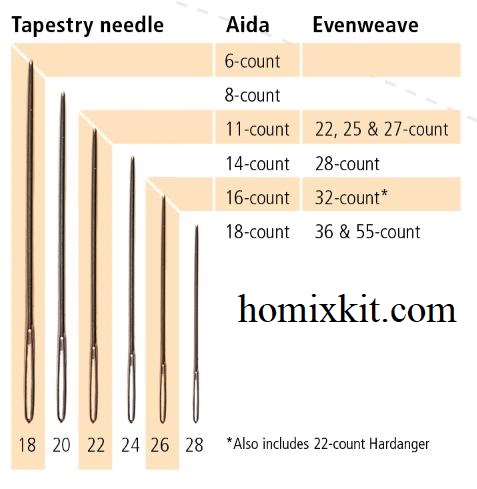
One of the most confusing aspects of needle shopping is the numbering system. Unlike many products, larger needle numbers actually indicate smaller needles.
For example:
- Size 18 = Larger needle
- Size 22 = Medium needle
- Size 24 = Standard cross stitch needle
- Size 26 = Smaller needle
- Size 28 = Very fine needle
This reverse numbering system often surprises beginners but becomes intuitive with experience. Cross stitch resources consistently emphasize that higher numbers correspond to finer needles designed for higher-count fabrics.
Needle Size vs Thread Thickness
Selecting a needle involves balancing thread thickness with fabric count. The eye must be large enough to accommodate the thread comfortably while the shaft remains appropriate for the fabric holes.
If the eye is too small, thread friction increases dramatically. If it’s too large, the needle creates unnecessary stress on the fabric. The ideal combination allows the thread to move smoothly without resistance.
Choosing Needles for Hand Embroidery
Hand embroidery projects vary widely in fabric type, thread weight, and stitch style. A needle suitable for cotton fabric may not perform well on silk or linen.
For standard embroidery floss on cotton fabric, sizes 7 to 10 crewel needles are popular choices. These provide a good balance between eye size and shaft thickness. Delicate fabrics often require finer needles to avoid visible puncture marks.
Experienced embroiderers frequently adjust needle size based on the number of floss strands being used. More strands generally require a larger eye, while finer details benefit from smaller needles.
Best Needles for Cotton Fabric
Cotton remains the most popular embroidery fabric because it’s durable, affordable, and beginner-friendly. Crewel needles sizes 7, 8, and 9 perform exceptionally well on most cotton fabrics.
These needles accommodate common embroidery floss without creating excessive holes. Their sharp points also allow precise stitch placement for detailed designs.
Best Needles for Silk and Delicate Fabrics
Silk, chiffon, and fine linen require extra care. Larger needles can leave permanent marks and weaken the fabric structure. Fine crewel needles with sharp points are typically recommended.
Testing on a fabric scrap before beginning the main project is always a wise practice. This simple step can prevent costly mistakes.
Choosing Needles for Cross Stitch
Cross stitch relies heavily on proper needle selection. Since the technique follows a fabric grid, the needle must pass through existing holes rather than create new ones.
Tapestry needles are universally recommended because their blunt tips preserve fabric integrity. Using a sharp needle on Aida cloth often results in split fibers and uneven stitches.
Needle Size Chart by Fabric Count
The following chart reflects current cross stitch recommendations commonly used in 2026.
| Fabric Count | Recommended Needle Size |
|---|---|
| 6 Count Aida | Size 18 |
| 8 Count Aida | Size 20 |
| 11 Count Aida | Size 22 |
| 14 Count Aida | Size 24 |
| 16 Count Aida | Size 24-26 |
| 18 Count Aida | Size 26-28 |
| 28 Count Evenweave | Size 24-26 |
| 32 Count Linen | Size 26 |
| 36 Count Linen | Size 28 |
This chart provides a reliable starting point, though personal preferences may vary slightly among stitchers.
Tapestry Needles Explained
Tapestry needles remain the preferred choice for cross stitch because they are specifically engineered for counted-thread work. Their blunt tips guide the needle through fabric holes while reducing accidental fabric damage.
Many advanced stitchers working on high-count fabrics prefer size 28 needles because they create minimal distortion while accommodating standard embroidery floss. Community discussions among experienced stitchers consistently highlight sizes 24, 26, and 28 as the most versatile options.
Needle Materials and Coatings
Needles are available in several materials and finishes, each offering unique benefits. The material affects durability, comfort, corrosion resistance, and overall stitching performance.
Gold-Plated Needles
Gold-plated needles offer smooth stitching and excellent corrosion resistance. Many stitchers appreciate their luxurious feel and reduced friction.
These needles can be particularly beneficial for individuals with nickel sensitivities. Their smooth surface allows thread to glide effortlessly, reducing wear and improving comfort during long stitching sessions.
Nickel-Plated and Stainless Steel Needles
Nickel-plated needles remain the most common and affordable option. They provide excellent durability and are widely available.
Stainless steel needles offer superior rust resistance and are ideal for humid environments. Many serious embroiderers keep both options available depending on project requirements and personal preferences.
Top Needle Brands in 2026
Several brands consistently receive positive feedback from embroidery and cross stitch communities.
Popular choices include:
| Brand | Strengths |
|---|---|
| John James | Reliable quality and consistency |
| Bohin | Smooth finish and durability |
| Tulip | Premium craftsmanship |
| Clover | Comfortable handling |
| Pony | Affordable and beginner-friendly |
Recent stitching community discussions frequently praise Bohin, Tulip, and John James needles for their durability and stitching comfort.
Needle Care and Maintenance
Even the best needle eventually wears out. Regular inspection helps prevent thread damage and project frustration. If a needle develops rough spots, bends, or discoloration, replacement is usually the best option.
Store needles in a needle case, magnetic holder, or needle minder to prevent loss and corrosion. Avoid leaving needles in fabric for extended periods, especially in humid conditions. Proper storage extends needle life and keeps projects clean and safe.
Many experienced stitchers replace frequently used needles every few major projects. Considering their low cost, this small investment can significantly improve stitching quality.
Mistakes Beginners Should Avoid
New stitchers often make similar mistakes when choosing needles. The most common error is assuming one needle works for every project. Different fabrics and threads require different tools.
Another frequent mistake is selecting needles based solely on availability rather than suitability. Taking a few minutes to match needle type, size, and thread can dramatically improve results.
Beginners should also avoid continuing to use damaged needles. A worn needle can silently ruin thread and fabric while making stitching unnecessarily difficult.
Final Thoughts and Buying Recommendations
Choosing embroidery and cross stitch needles in 2026 doesn’t have to feel overwhelming. Once you understand needle types, sizes, and fabric compatibility, selecting the right tool becomes straightforward. For traditional embroidery, crewel needles remain the top choice due to their sharp points and versatile eyes. For cross stitch, tapestry needles continue to dominate because they protect fabric while creating neat, professional stitches.
If you’re building your first needle collection, start with a selection of crewel needles for embroidery and tapestry needles in sizes 24, 26, and 28 for cross stitch. These sizes cover the vast majority of beginner and intermediate projects. As your skills grow, you’ll naturally discover personal preferences and favorite brands.
The right needle won’t magically make you an expert stitcher overnight, but it will make every stitch smoother, cleaner, and more enjoyable. That’s a small change with a surprisingly big impact.
FAQs
1. What needle is best for cross stitch?
A tapestry needle is the best choice because its blunt tip passes through fabric holes without splitting fibers.
2. What size needle should I use for 14-count Aida?
Most experts recommend a size 24 tapestry needle for 14-count Aida fabric.
3. Why does my embroidery thread keep fraying?
Fraying often occurs when the needle eye is too small or the needle surface has become rough from wear.
4. Are expensive needles worth buying?
Premium needles often provide smoother finishes, better durability, and improved stitching comfort, making them worthwhile for frequent stitchers.
5. How often should embroidery needles be replaced?
Replace needles when they become bent, rough, discolored, or begin damaging thread. Frequent stitchers may replace them every few major projects.

Pingback: Top 33 Picks Best Punch Needle Kits and Embroidery Supplies in 2026 - Homix Kit