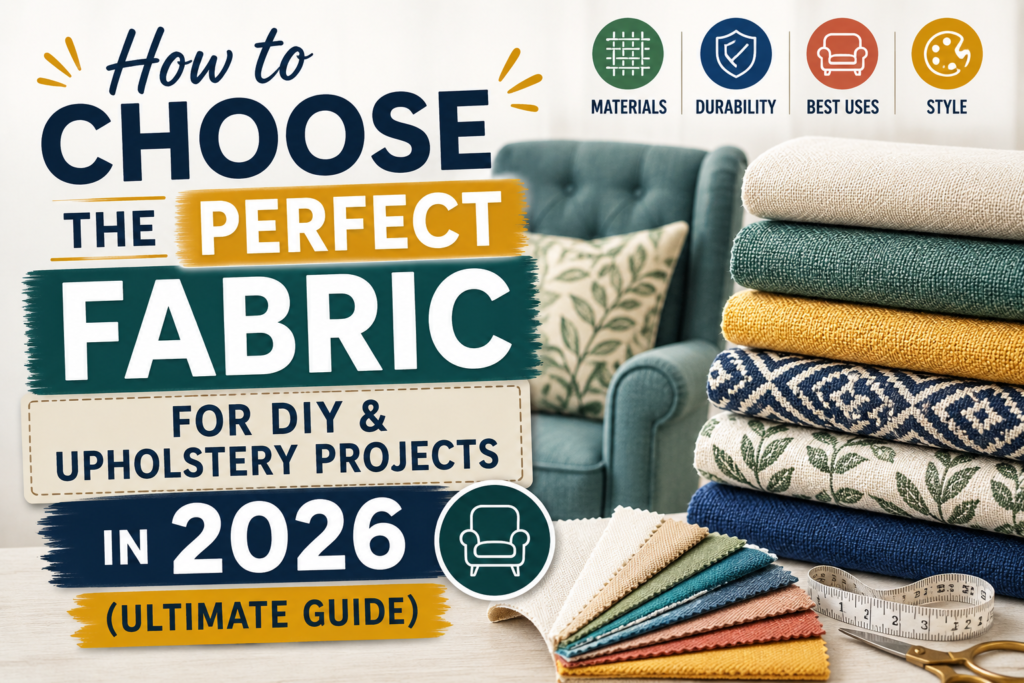

Choosing fabric for a DIY or upholstery project in 2026 feels a little like dating. At first glance, everything looks beautiful. The colors catch your eye, the texture feels amazing, and suddenly you’re convinced you’ve found “the one.” Then reality hits. Maybe the fabric stains easily, fades in sunlight, wrinkles nonstop, or simply doesn’t survive everyday use. That gorgeous cream linen sofa? It might look stunning online but become a nightmare in a home with kids or pets.
That’s why fabric choice matters more than most people realize. The right fabric doesn’t just improve appearance it affects durability, comfort, maintenance, and even the overall vibe of your home. In 2026, upholstery and DIY trends are shifting toward textured materials, eco-friendly fibers, cozy aesthetics, and performance fabrics that balance beauty with practicality.
Whether you’re reupholstering a chair, sewing cushion covers, making curtains, or creating a complete DIY furniture makeover, this ultimate guide will help you choose the perfect fabric without wasting money or making expensive mistakes.
Why Fabric Selection Matters in 2026
Interior design trends in 2026 are all about warmth, texture, and functionality. Minimalist interiors are evolving into softer, more inviting spaces filled with layered fabrics, earthy colors, and tactile materials. People want homes that feel comfortable, not just look stylish.
One major trend dominating the market is performance fabric. These fabrics resist stains, moisture, fading, and wear while still looking luxurious. Homeowners are no longer willing to sacrifice durability for beauty. Fabrics now need to survive pets, children, coffee spills, sunlight, and everyday life.
At the same time, sustainable materials are becoming increasingly popular. Organic cotton, recycled polyester, linen blends, and eco-friendly upholstery textiles are appearing in more DIY and furniture projects than ever before.
Most Popular Fabric Types for DIY & Upholstery in 2026
Before choosing fabric, you need to understand how different materials behave. Each fabric has its own strengths, weaknesses, texture, and personality.
1. Cotton Fabric

Cotton remains one of the most versatile fabrics for DIY projects. It’s breathable, soft, easy to sew, and available in endless colors and patterns. Cotton works especially well for beginner sewing projects because it’s easy to cut and handle.
Best Uses
- Cushion covers
- Curtains
- Tote bags
- Light upholstery
- Table runners
Pros
- Affordable
- Easy to clean
- Beginner-friendly
- Comfortable texture
Cons
- Wrinkles easily
- Can fade in sunlight
- Less durable for heavy upholstery
In 2026, cotton-linen blends are especially trendy because they combine softness with added texture and durability.
2. Linen Fabric

Linen is having a huge moment right now. If 2026 interiors had a signature fabric, linen would probably win the title. It creates that relaxed, organic, effortlessly luxurious look people are obsessed with on Pinterest and Instagram.
Linen works beautifully in modern, Scandinavian, rustic, and minimalist interiors. Its slightly wrinkled texture actually adds charm rather than looking messy.
Best Uses
- Curtains
- Cushion covers
- Accent chairs
- Decorative pillows
- Lightweight upholstery
Pros
- Elegant natural texture
- Breathable
- Eco-friendly
- Timeless appearance
Cons
- Expensive
- Wrinkles naturally
- Less stain-resistant
Think of linen like a perfectly imperfect handmade ceramic mug its beauty comes from its natural character.
3. Velvet Fabric

Velvet is one of the biggest upholstery trends of 2026. Rich, soft, dramatic, and luxurious, velvet instantly transforms furniture into a statement piece.
Deep jewel tones like emerald green, navy blue, burgundy, and chocolate brown dominate velvet trends this year.
Best Uses
- Sofas
- Accent chairs
- Ottoman covers
- Decorative pillows
- Luxury DIY décor
Pros
- Luxurious appearance
- Soft texture
- Rich color depth
- Adds warmth
Cons
- Shows pressure marks
- Requires maintenance
- Attracts dust
Performance velvet fabrics are becoming extremely popular because they offer stain resistance without losing that plush look.
4. Polyester Performance Fabric


Performance fabrics are basically superheroes disguised as upholstery materials. They’re designed to resist spills, stains, fading, and wear while still looking stylish.
For families, pet owners, or high-traffic spaces, these fabrics are game changers.
Best Uses
- Family sofas
- Dining chairs
- Outdoor cushions
- Pet-friendly furniture
Pros
- Stain-resistant
- Durable
- Easy to clean
- Affordable
Cons
- Less breathable than natural fibers
- Can feel synthetic
In 2026, many performance fabrics are designed to mimic linen or velvet textures while offering far better durability.
5. Leather & Faux Leather

Leather remains timeless, but faux leather is gaining massive popularity because it’s more affordable and easier to maintain.
Best Uses
- Dining chairs
- Office chairs
- Modern sofas
- Headboards
Pros
- Easy to wipe clean
- Stylish
- Long-lasting
- Water-resistant
Cons
- Can crack over time
- Feels cold initially
- Real leather is expensive
Modern faux leather in 2026 looks far more realistic than older versions, making it a smart budget-friendly option.
How to Choose Fabric Based on Your Project
Choosing the perfect fabric isn’t only about appearance. You need to match the material to the project’s purpose.
For Sofas and Heavy Upholstery

Heavy-use furniture needs durable fabrics with high rub counts and strong weave structures.
Best Choices
- Performance polyester
- Velvet performance fabric
- Leather
- Heavy cotton blends
Avoid
- Thin linen
- Delicate silk
- Lightweight cotton
If your sofa is used daily, prioritize durability first and aesthetics second.
For DIY Sewing Projects

Beginner DIY projects need fabrics that are easy to cut, sew, and manage.
Best Beginner Fabrics
- Cotton
- Cotton blends
- Canvas
- Lightweight linen blends
Harder Fabrics for Beginners
- Velvet
- Silk
- Leather
- Stretch fabrics
Cotton remains the best beginner-friendly option because it behaves predictably under a sewing machine.
For Curtains and Home Décor

Curtain fabrics dramatically affect lighting and room atmosphere.
Best Curtain Fabrics
- Linen
- Cotton blends
- Sheer organza
- Velvet blackout fabrics
Pro Tip
Lighter fabrics create airy spaces while velvet curtains add warmth and luxury.
Understanding Fabric Durability
One of the biggest upholstery mistakes people make is ignoring durability ratings.
What is Double Rub Count?
Double rub count measures how much wear fabric can handle before showing damage.
| Rub Count | Best Use |
|---|---|
| Under 15,000 | Decorative use only |
| 15,000–25,000 | Light residential use |
| 25,000–40,000 | Heavy residential use |
| 40,000+ | Commercial-grade durability |
For sofas and heavily used furniture, aim for at least 25,000 double rubs.
Fabric Color Trends in 2026
Fabric colors in 2026 are moving toward earthy, calming, nature-inspired tones.
Trending Colors
- Warm beige
- Olive green
- Terracotta
- Dusty blue
- Chocolate brown
- Soft cream
- Deep burgundy
Bold neon colors are fading while layered neutrals and textured fabrics dominate modern interiors.
Best Budget Fabrics in 2026
Not every great fabric needs to cost a fortune.
| Fabric | Budget Level | Best Feature |
|---|---|---|
| Cotton Blend | Affordable | Easy to sew |
| Polyester Performance Fabric | Affordable | Durable |
| Faux Velvet | Medium | Luxury look |
| Faux Leather | Medium | Stylish & practical |
| Canvas Fabric | Low | Extremely durable |
Performance polyester fabrics currently offer the best value overall because they combine affordability with durability.
Common Fabric Buying Mistakes
Choosing Style Over Function
That delicate white linen sofa may look amazing online, but it’s risky for homes with pets or children.
Ignoring Cleaning Requirements
Always check whether fabrics require:
- Dry cleaning
- Spot cleaning
- Machine washing
Maintenance matters more than most people expect.
Forgetting Lighting Conditions
Sunlight can dramatically fade certain fabrics. Velvet, cotton, and some dyed linens are especially vulnerable near large windows.
Buying Tiny Samples Only
Small fabric swatches often look different once stretched across large furniture pieces.
Final Thoughts
Choosing the perfect fabric in 2026 is really about balance. You want something stylish, durable, comfortable, and practical for your lifestyle. Cotton works wonderfully for beginner DIY projects, linen creates relaxed elegance, velvet adds luxury, and performance fabrics solve everyday durability problems.
The smartest fabric choices aren’t always the most expensive ones. Sometimes a well-made polyester blend outperforms delicate luxury fabrics simply because it fits real life better.
Think of fabric like the personality of your furniture or project. It determines not only how things look but how they feel, age, and survive daily use. Choose wisely, and even simple DIY projects can look professionally designed.
FAQs
1. What is the best upholstery fabric for homes with pets?
Performance polyester fabrics and leather are excellent choices because they resist stains and scratches better than delicate materials.
2. Is linen good for upholstery?
Yes, but it’s better for light to medium-use furniture unless blended with stronger fibers.
3. Which fabric is easiest for beginners to sew?
Cotton fabric is the easiest and most beginner-friendly option for DIY sewing projects.
4. What fabric is trending most in 2026?
Velvet, linen blends, and textured performance fabrics are among the biggest trends this year.
5. How can I tell if upholstery fabric is durable?
Check the fabric’s double rub count. For heavy residential use, choose fabrics rated above 25,000 double rubs.

Pingback: Top 20 Best Fabrics for Sewing & Upholstery in 2026 (DIY Craft Guide)